




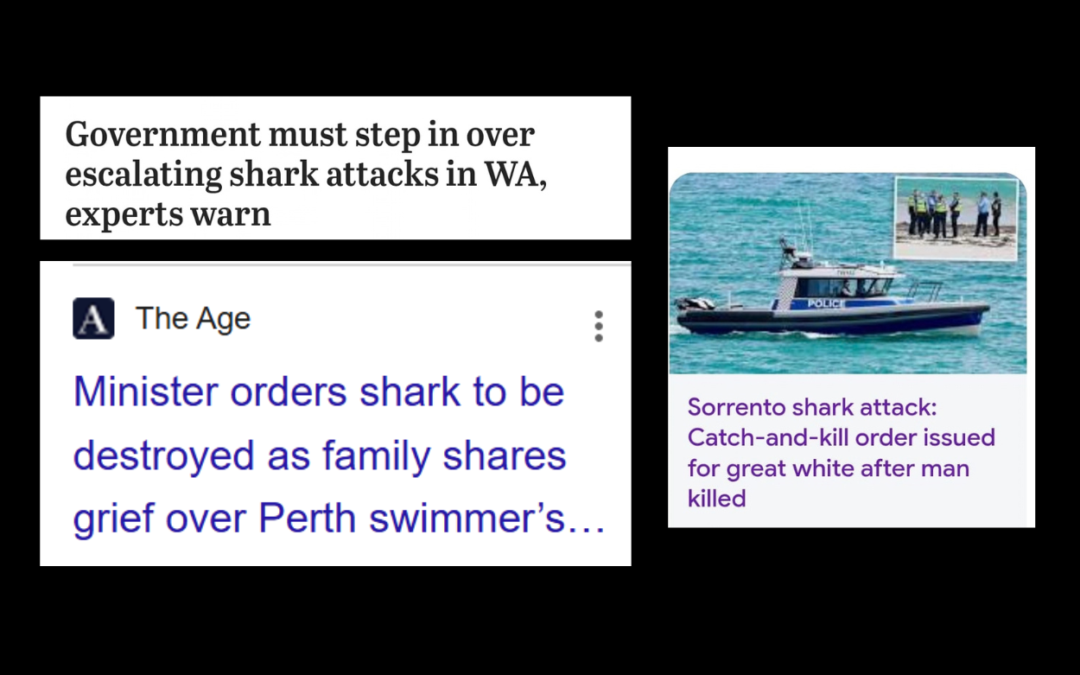
A shark killed one man this week.
Men killed three Australian women in one day.
Only one of these scenarios will receive widespread attention – and no, it won’t be the fact that three women are dead at the hands of men known to them in one day.
You can help me get a Royal Commission into the Killing of Women and Girls by signing the petition
A 70-year-old woman’s body was found in a home at Mole River in NSW when police responded to an act of domestic violence yesterday, A 37-year-old male is in custody.
A 23-year-old woman was stabbed to death in a home at Kooringal, NSW, yesterday.
A 90-year-old woman was stabbed to death at Bondi Beach, NSW, yesterday.
A Northern Territory woman was taken to hospital in critical condition yesterday and a man known to her is in custody.
Early this week a woman died after an assault at Palmerston, NT. Her partner was charged with assault. An autopsy will determine if he is charged over her murder.
There’s always been a huge disparity in how the media, politicians, policy-makers and our community responds to shark attacks compared to femicide.
We’ve seen hundreds of headlines published about the shark attack in Perth this past week but there’s been very few published on the deaths of women this week.
I have documented the violent deaths of 52 women this year. Not once has a ‘catch and kill’ order been issued within hours of a woman’s death at the hands of a man. No I am not suggesting femicide perpetrators be killed, but I am using this as an example of how hard authorities will go when a shark kills a person.
But it shows how authorities see the existence of wild animals as an urgent threat to public safety that require immediate preventative interventions.
Beaches are closed. Nets are put in place. Wild animals are tracked. Warnings are issued.
Political leaders come with flowers and sympathy.
When women are killed, we’re asked ‘what did she do to deserve it’, the perpetrators score a ‘good bloke narrative’, political leaders have no words of condolence and calls for increased funding, support services and better legal responses fall on deaf ears.
Where there is a policy response, it always re-active and far too minimal.
We need strong investment in systemic prevention targeting perpetrators and sustained cultural and structural responses so we shift the drivers that underpin male violence against women in our country.